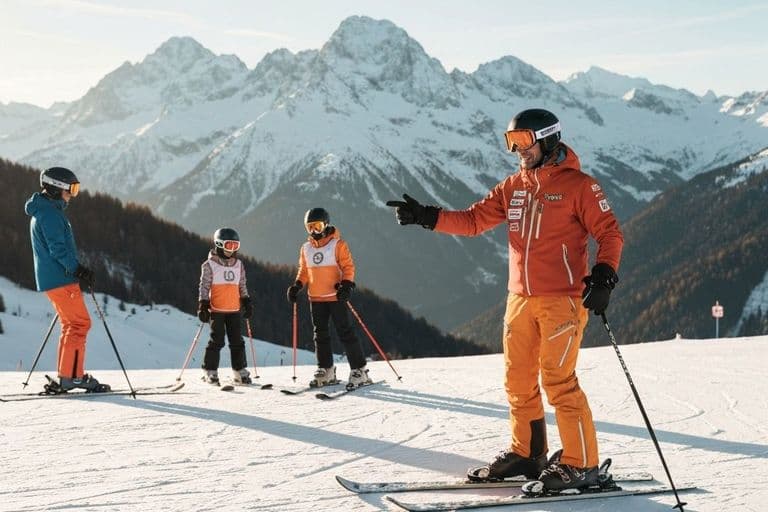
At What Age Can Kids Start Skiing?
It is the question parents ask us most: how old does my child need to be to start skiing? The short answer is that children can start playing on skis from about age 2, and real skiing skills usually arrive somewhere between 3 and 5. The honest answer is that it depends much more on your child than on the number of candles on the last birthday cake.
Age 2: playing on skis
At 2, a child is not learning technique. They are learning that snow is fun, that skis slide, and that falling over is not a drama. Attention spans are a few minutes long, legs get tired fast, and cold hands end the session at once.
That is why our youngest sessions last one hour and look more like a game than a lesson. The Mini Discovery (ages 2-4) is a single session to see how your child reacts. Snow Cubs (ages 2-3) continues with regular private sessions for toddlers who loved it. A successful hour at this age can be ten metres of sliding and a big smile.
Age 3: the first real steps
Around 3, many children can listen for a little longer, copy a movement, and stand on skis with more balance. This is the age at which many ski schools start their group kids clubs. Some three-year-olds thrive in a group; others need an adult who follows only them, especially if they are shy or a bit scared.
Ages 4-5: gaining independence
Between 4 and 5, most children can learn to stop, turn in a snowplow, and use a beginner lift. They start to enjoy the feeling of going somewhere on their own. Our Snow Explorers sessions (ages 4-5) last one and a half hours, for one or two children, and are built around exactly that growing independence.
Age 6 and older
From 6, children can usually follow a two-hour lesson, link turns, and explore easy runs with their family. Private lessons can then last two hours, a half day or a full day, and brothers, sisters or parents can join the same lesson.
Signs your child is ready
- Walks and climbs confidently: ski boots are heavy, and a child who is still unsteady on foot will find them frustrating.
- Can spend an hour with another adult: a lesson works best when a child can let a parent step back for a while.
- Is curious about snow: children who already love playing in the snow usually love sliding on it.
- Is rested and fed: a tired or hungry toddler will not enjoy anything, however good the instructor.
When it is better to wait
If your child cries at the idea of wearing boots, is recovering from an illness, or simply does not want to, there is no rush. A bad first experience can put a child off for years; a relaxed start one season later rarely costs anything. We will tell you honestly if we think waiting is the better choice.
Tips for the first days
- Keep it short: one hour is plenty for toddlers. Stop while it is still fun.
- Dress in layers: several thin layers, mittens and a helmet, plus sunscreen – at 1,500 m the sun is strong.
- Bring a snack: a small break with something to eat does wonders for motivation.
- Let the instructor lead: children often listen differently to an instructor than to a parent, and that is normal.
How we can help
Tell Rox your child's age, character and any worries when you get in touch. She matches you with a patient instructor, and that instructor calls you before the lesson to plan the first hour together. If your child is not ready yet, you will hear it from us first.